(A) Determine the content of this activity, set the estimated duration for each part, and ensure overall control.
(B) Refine and accurately frame your guiding words to better align with learning objectives. Emphasize the importance of children's hands-on activities.
(C) Change teaching concepts: Consciously cultivate children's ability to think actively. The thinking process is more important.
(D) Focus on what the children perceive, not just what they learn!
(E) Emphasize the importance of children's behavior norms.
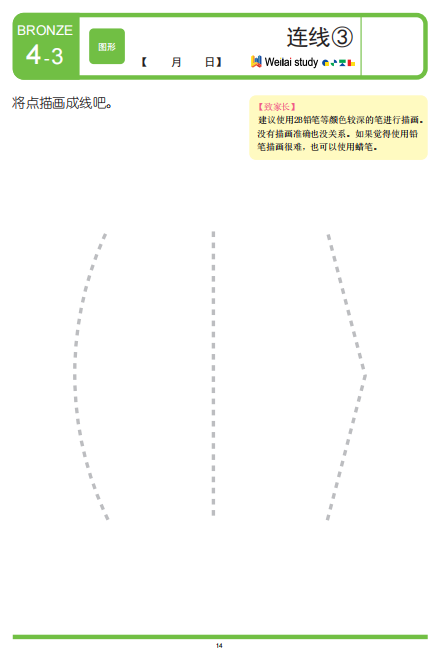
Teacher: What kind of line do you see? (Guide the child to say "dashed line").
Teacher: What kind of line do you see? Is it clear or broken?
Children: ……
Teacher: What kind of line do you see? Is it clear or broken?
Children: Clear (Only on child answered)
Teacher: No, it's broken. This is a dashed line.
...
Teacher: What are we going to do now? (Show the relevant page of the textbook.)
Children: Connect the dots.
Teacher: Please be careful when connecting the dots! Let's start.
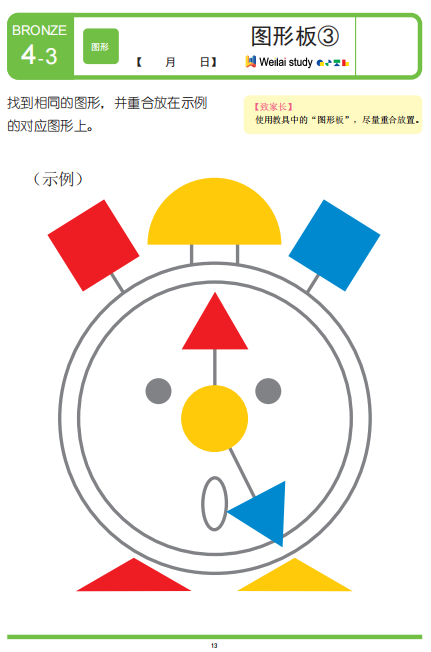
Teacher: What is this?
Children: Alarm clock
Teacher: Please talk about the role of an alarm clock in daily life.
Teacher: What is this? These are the small antennae of the alarm clock; they are the ringing mechanism, and once it vibrates, the alarm clock sounds. Then the teacher introduces the minute hand, the hour hand, and the corresponding shapes...
Teacher: The short hand is the hour hand, and the long hand is the minute hand. (Repeat again).
Teacher: This is its little support point; without it, it wouldn't stand up. What shape is its little stand?
Children: Triangle
...
Teacher: What are we going to do now? (Showing the relevant page of the textbook.)
Children: Play the shape board.
Teacher: What do you see?
Children: Alarm clock
Teacher: What shapes are on the alarm clock?
Children: Triangle, square, red square...
Teacher: That's right, please come and operate the shape board now.